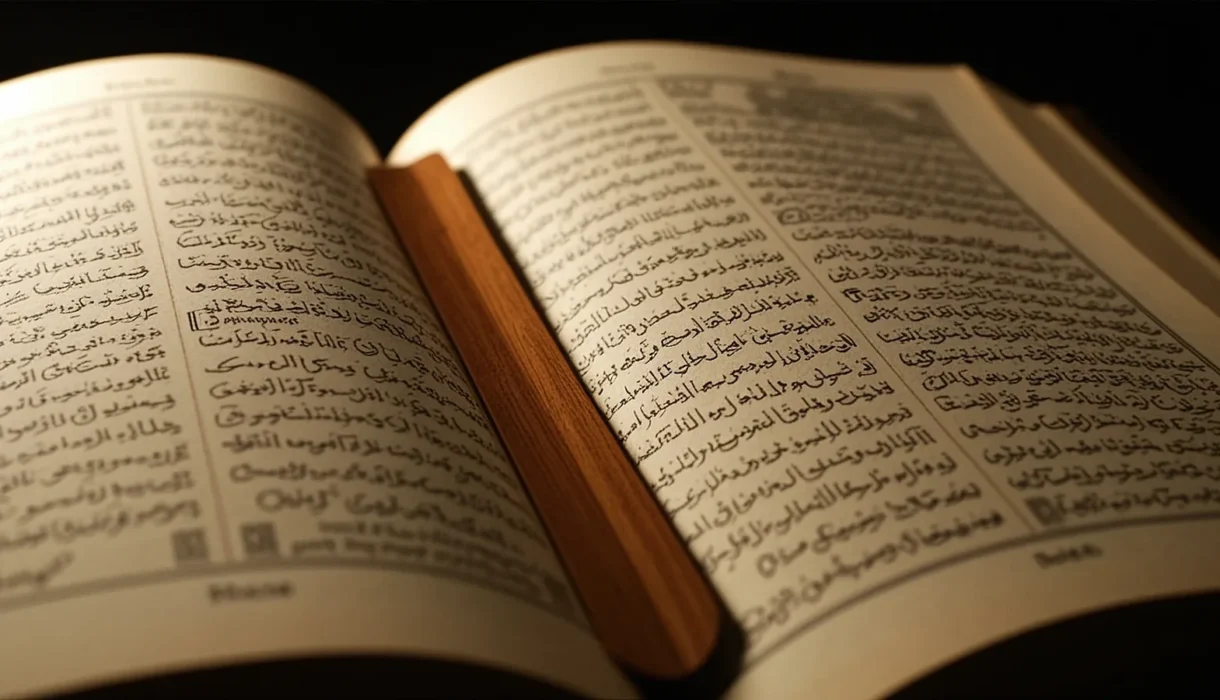

What is tajweed? It is the set of rules for reciting the Quran correctly: where each letter is pronounced from, how long a vowel is held, and how letters change when they meet. It is not a separate subject bolted onto reading; it is the difference between reading words and reciting them as they were revealed.
The word itself means to improve or make good. That is the most useful definition a beginner can hold onto, because it explains why tajweed is taught through correction rather than memorised as a list of names. You do not learn it by reading about it; you learn it by being heard.
Why tajweed exists
Arabic written without vowel marks can be read several ways. Tajweed fixes the reading: which letters are lengthened, which are merged, where a reciter stops and where they carry on. Without it, two people reading the same page can produce different words.
The rules were not invented to make recitation difficult. They describe how the Quran has been recited since it was transmitted, written down so that the recitation survives without a teacher in the room.
What tajweed is not
It is not a beautiful voice. A reciter with a plain voice and correct tajweed is reciting properly; a reciter with a beautiful voice and broken rules is not.
It is also not a beginner’s first subject. A student who cannot yet recognise joined letters cannot apply a rule about how two of them meet. Tajweed builds on reading, not alongside it.
The parts that matter first
Three areas carry most of the practical weight for a beginner:
- Makharij — where each letter is produced in the mouth or throat.
- Sifat — the qualities of a letter, such as whether it is heavy or light.
- Lengths — how long a vowel is held, which changes meaning if it is wrong.
Rules about merging and pausing come after these, because they assume the letters themselves are already correct.
How it is actually learned
By reciting to someone who corrects you. Tajweed is a physical skill before it is a body of knowledge: the mouth has to learn where a letter sits, and that happens through repetition with feedback, not through reading about it.
This is why a one-to-one lesson works better than a video course for the early stages. A recording cannot tell you that your ha is coming from the wrong part of the throat.
How long it takes
To read correctly with the main rules applied, most students studying a few times a week need twelve to eighteen months after they can already read. Mastery of the finer rules takes years, and is usually pursued with an ijaazah teacher.
Anyone promising fluent, fully ruled recitation in three months is selling a course, not teaching a skill.
How to tell you are improving
Not by how fast you read. By these markers:
- You correct yourself when a vowel is wrong, before the teacher does.
- You can hear the difference between two similar letters in someone else’s recitation.
- Your recitation of a familiar page sounds the same on two different days.
Consistency across days is the one most students miss, and it is the truest sign that a rule has moved from memory into habit.
Do you need tajweed to read the Quran?
You need it to recite correctly, and reciting correctly is the aim. Reading for meaning, memorising, and praying all depend on getting the words right, which is what the rules protect.
Start with reading, then add tajweed as the correction of what you already read. That order is kinder and faster than trying to learn both at once, and it means every rule you learn immediately improves something you can already do.
Do the rules change the meaning?
Sometimes, directly. Vowel length is the clearest case: shortening a long vowel can turn one word into another, and that changes what is being recited rather than merely how it sounds. Letter identity is the other: a letter produced from the wrong place is a different letter, which changes the word.
Other rules matter for correctness without changing meaning, and beginners should know the difference. Mixing the two categories up makes students anxious about errors that do not matter and careless about the ones that do.
Common misconceptions
Three ideas cause most of the confusion. The first is that tajweed is only for people who want to become reciters. In practice every Muslim who prays needs enough of it to recite correctly, which is a smaller body of rules than the full science.
The second is that a beautiful voice indicates good tajweed. The two are unrelated, and a plain voice with correct letters is closer to the aim than a melodious one with wrong lengths.
The third is that rules can be learned from a book and then applied. They cannot, for the same reason swimming cannot be learned from a diagram: the feedback is physical, and only a listener can give it.
Where to begin
If you are still learning the letters, start there — see where a beginner begins. If you can already read and want the rules in order, read the first tajweed rules, or look at what an online tajweed course covers week by week.
The free trial class is the quickest way to find out how much correction you actually need, and the courses show the full route from letters to recitation.
Questions before you book?
Join the women-only WhatsApp community where new batches and study reminders are posted first.
Join the WhatsApp Community
Aalima Warisha is an Aalima and Quran teacher at ATF Vision Islamic Institute.
View All Articles